Let's Connect
Our friendly and educated team is here to partner with you every step of the way. Connect today to learn of all the ways to partner with The Common Market.
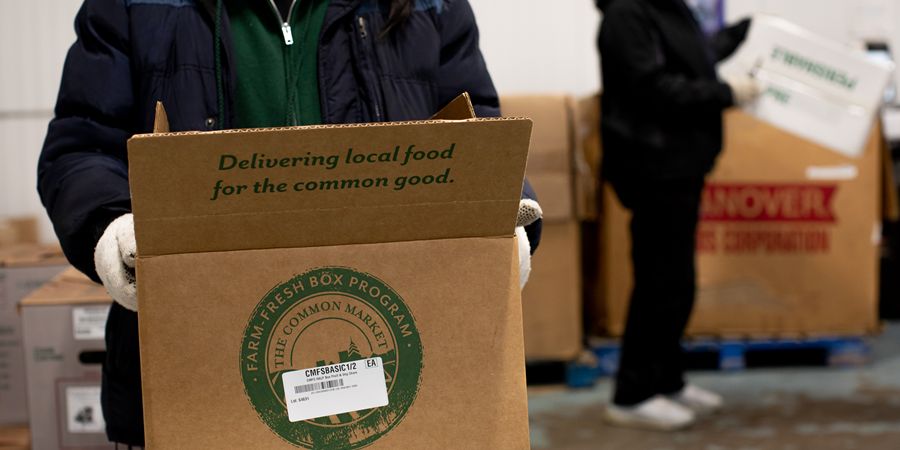
Delivering local food for the common good.
Local and regional food systems are growing fast. As more schools, hospitals, and institutions partner with local distributors, food safety has never mattered more. Here's what a gold-standard approach looks like, and why it's opening institutional doors across the country.
Some institutional buyers worry that local food is less safe. Smaller farms don't always have the paperwork that big vendors do, and purchasing teams are used to working with distributors who've already been vetted and audited.
Those concerns are understandable, but they're also largely unfounded.
Local food spends less time in transit, which means less opportunity for temperature fluctuations and bacterial growth. Shorter supply chains have fewer handoff points, which makes traceability faster and accountability more direct. When something goes wrong, regional distributors can often respond in hours, not days.
The freshness advantage is real, too. Produce that travels two hundred miles is simply not the same as produce that travels two thousand.
For certified regional distributors, strong food safety practices make shorter supply chains a real advantage.
Regional food networks are built from many small and mid-sized farms, each with its own infrastructure and practices. Standardizing safety across that variety takes real coordination.
Food safety practices like Hazard Analysis Critical Control Point (HACCP) planning, temperature monitoring, and recall protocols are foundational for any serious distributor. On top of those, formal certification processes can be heavy on documentation and costly, especially for smaller operations without dedicated administrative staff.
Many farms are already doing things right. The challenge is getting the paperwork to match.
That's where a mission-driven distributor can make a real difference. The Common Market works alongside its farm partners to navigate certification paperwork, providing technical assistance and cost-sharing where needed.
SQF stands for Safe Quality Food. It's a globally recognized certification benchmarked by the Global Food Safety Initiative (GFSI), requiring rigorous annual third-party audits of a distributor's full operations.
Earning SQF certification means demonstrating mastery of safe food handling at every stage, from receiving and storage to recall readiness and staff training.
For institutional buyers, SQF certification signals that local food is held to the same food safety standards as any large national vendor. It levels the playing field.
Schools and healthcare institutions aren't feeding the general public. They're serving populations with heightened vulnerability:
Foodborne illness prevention in these settings is a fundamental duty of care. One contamination incident can harm hundreds of people and undo years of earned institutional trust.
The Common Market made a deliberate choice from the beginning: earn the certifications that open institutional doors.
Co-founder Tatiana Garcia-Granados led the effort to pursue SQF certification because she wanted local food "on an even footing" with conventional suppliers. Today, all of The Common Market's regional hubs hold SQF certification and consistently earn "Excellent" audit scores.
Their approach to food quality control extends well beyond their own warehouses. They work alongside farm partners to pursue Good Agricultural Practices (GAP) certification, provide technical assistance, and share costs where needed.
That layered approach is what allows healthcare networks, cancer centers, and school districts to source local food with complete confidence in its safety.
Food safety certification opens institutional doors. It can also create real barriers for farms that don't have the resources to navigate the process on their own.
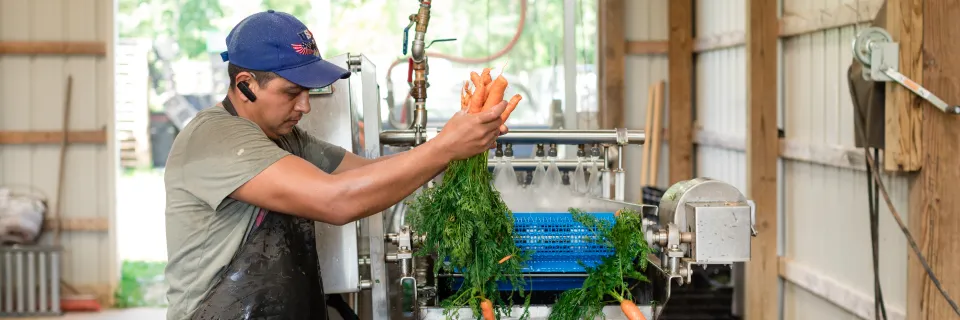
Helping more producers meet high standards is the goal. Food safety education, technical assistance, and cost-sharing partnerships make it possible for small farms to earn certifications without bearing the expense and administrative burdens alone.
Local food systems are built on relationships, accountability, and a shared mission. Those are precisely the qualities that make them capable of meeting and exceeding the highest food safety benchmarks in the industry.
At The Common Market, our mission is to connect urban communities with fresh, healthy food from sustainable family farms. We're a nonprofit regional food distributor operating across the Mid-Atlantic, Southeast, Texas, and Great Lakes regions. We work alongside farmers, schools, healthcare institutions, and community organizations to build equitable, resilient regional food systems for everyone.
Since 2008, we've supported hundreds of family farms while delivering millions of healthy meal equivalents to the communities that need them most. If you're ready to bring locally sourced food to your school or institution, we'd love to partner with you.
Our friendly and educated team is here to partner with you every step of the way. Connect today to learn of all the ways to partner with The Common Market.
"The Pink Lady apples were fantastic. We get our apples from a few different places and I must say that those were probably the best out of a non-apple season."
— Jennifer Monaco, Executive Chef, Sustainable Fare LLC, The Lawrenceville School