Let's Connect
Our friendly and educated team is here to partner with you every step of the way. Connect today to learn of all the ways to partner with The Common Market.

Delivering local food for the common good.
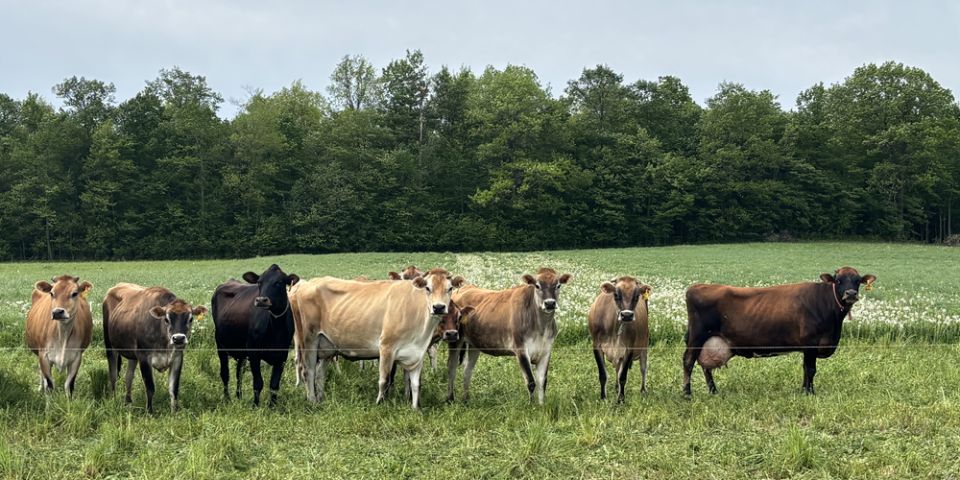
Westchester County, NY is home to some of the region's busiest institutional kitchens: hospital systems, school districts, and corporate campuses that feed thousands of people every single day. These large communities already know what it means to source at scale. What they haven't always had is an easy way to source at scale and know exactly where that food comes from.
That's the gap The Common Market is built to close, not just as a distributor, but as the connective tissue between farm and institution.
We're excitedly expanding our work in Westchester, building on years-long supplier relationships and values-aligned food service management groups like Morrison Healthcare.
One of the clearest examples of what that connection looks like in practice: a recent farm tour The Common Market organized for Megan McMinn, Senior Executive Chef with Morrison Healthcare, and her team of chefs and operators. The day offered a chance to walk the fields and meet the farmers behind the food on their menus.
"We're lucky to have partners who share the same goals, values, and vision… feeding people nutrient-dense foods while supporting local farmers." — -Megan McMinn, Senior Executive Chef, Morrison Healthcare, Midhudson Regional Hospital, NY
Reflecting on the day afterward, Megan put it simply: it was a pleasure putting together something so impactful alongside The Common Market team.
The Common Market is not a distant supply chain, but a direct, visible line from field to kitchen.
“What’s so great about coming to the farms, is hearing the story and hearing the background of what brought the farmers here to begin with and how hard they work to share their beautiful crop,” Lisa Giovannielli, Partnership Director with The Common Market Mid-Atlantic, shared coming off this same farm tour. “And what I love to do is be able to retell those stories to our partners.”
The case for Westchester is straightforward. The county sits close to the Hudson Valley and the broader New York growing region, which means shorter supply chains and fresher product for the institutions we serve. Its density of hospitals, schools, and corporate dining halls clustered relatively close together, represents a real population in need of fresh, healthy food.
The Common Market exists to shorten the distance between small and mid-size farms and the institutions that feed communities–and to make that distance visible, not abstract, for the people doing the cooking. Westchester's hospitals, schools, and corporate campuses are exactly the kind of anchor institution buyers we built this model for.
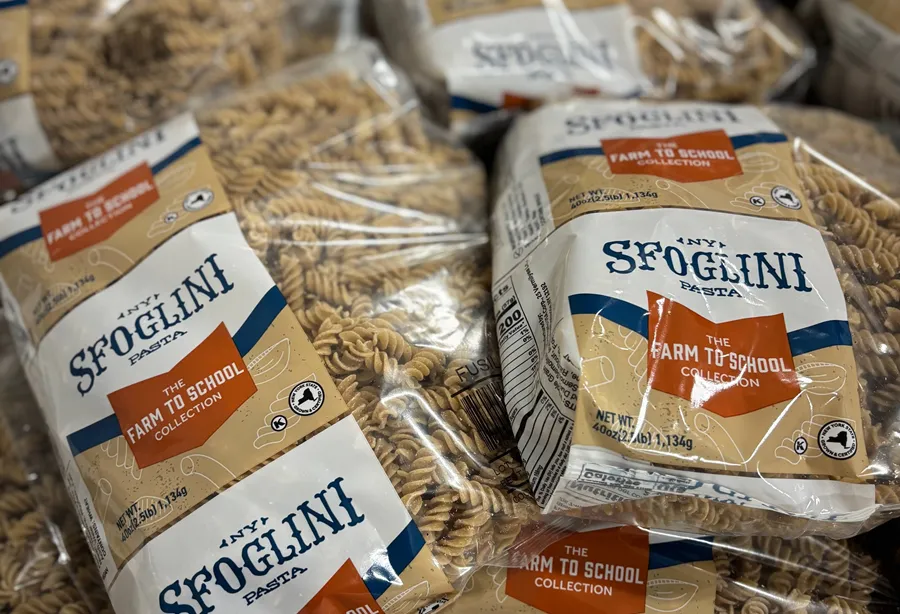
Sfoglini Pasta started in 2012 in a 700-square-foot Brooklyn "pasta laboratory," founded by chef Steve Gonzalez and creative director Scott Ketchum. Today the company crafts more than 10,000 pounds of pasta a day out of a 37,000-square-foot factory in Coxsackie, in the heart of the Hudson Valley.
What sets Sfoglini apart is the process: traditional bronze-die extrusion and slow-drying, which gives the pasta a rougher, more textured surface that holds sauce far better than mass-market alternatives. Many of their products use New York State grains–rye, emmer, einkorn, spelt– creating a direct, traceable link back to regional agriculture.
In 2021, they launched a line of whole grain “Farm to School” pastas made with 51% NY state flour designed for schools and institutions. These pastas are NY state grown and certified and come packed in a 15 pound food service case size.
For school and hospital dining programs looking to elevate a pantry staple with a real story behind it, Sfoglini is an easy sell.
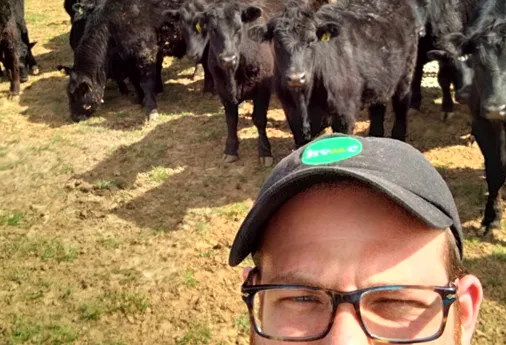
Since 2013, Happy Valley Meat Company has been bridging the gap between small family farms and some of the best chefs and buyers in the region. It's a mission built on connection: linking small-scale farmers who meet the highest standards with the urban and institutional buyers who want to know where their food comes from.
Every cut is traceable back to the farm, and farmers are paid a fixed premium over commodity prices–a model that rewards quality and consistency rather than just volume.
We talked with Dan, owner of Happy Valley, about what excites him most about this work:
"The best part of supplying to institutional kitchens is interacting with the students. Growing up, I didn't know where my food came from, which is crazy given that we eat three times a day! I love going into schools for a tasting, cooking demonstration, or classroom setting. Not all the students care, but the ones that do make it all worthwhile."
For dining directors working with Happy Valley for the first time, Dan's advice is simple: ask questions.
"We do a great job of making things easy and consistent, but the conventional system is so big and efficient that it trains food service professionals to look for very specific things. We don't have the same technology, so things might look a little different; that doesn't mean it's bad, just different!"
He also noted that Happy Valley's most popular items for high-volume institutional kitchens are bulk ground beef and 4oz patties–the workhorses of any cow, and the cuts that move fastest through a busy kitchen. Asked to sum up Happy Valley in one sentence, Dan put it this way:
"Happy Valley Meat Company enables people who care about where their food comes from to source local meat by using a wide community to find homes for all the cuts that come from a single cow."
This traceability and story-driven sourcing model is a strong fit for healthcare and university dining programs looking to highlight ethical sourcing.
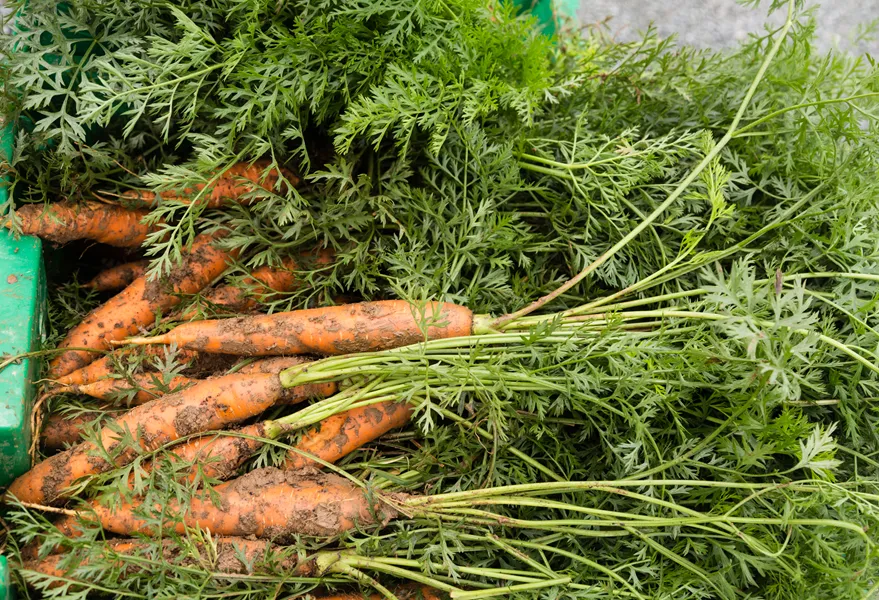
Dagele Bros. Produce is a multi-generational family farm, started in 1919 when brothers Frank, Robert, and Randal Dagele's grandparents, John and Josephine, emigrated from Poland and settled in the nutrient-rich "Black Dirt" region of Orange County–22 square miles of some of the most fertile farmland in the Northeast.
Farming roughly 400 acres, Dagele Brothers is especially known for onions grown with the tops left on for freshness, along with salad greens, pumpkins, and squash.
It's a classic "meet your farmer" story– four generations working the same land–and it resonates strongly with school and hospital audiences who want to know the people behind their food, not just the product.
For the hospitals, dining halls, and cafeterias we work with, this expansion means a more direct line to the farms and producers behind their food — pasta crafted with New York grains, meat raised by farmers who are paid fairly and known by name, and produce grown by the same family for over a hundred years.
But The Common Market's role goes beyond moving product from farm to kitchen. As Megan and her team saw firsthand, we're the connective tissue: the storytellers and relationship-builders who help institutions understand exactly who grew, raised, or made what's on their menu–and help farmers reach buyers who value that story as much as the product itself. A tour like theirs isn't a one-off; it's what we want sourcing in Westchester to feel like day to day.
If you're a hospital, school, or corporate dining director in Westchester, we'd love to talk about how these partners–and others in our network–could fit into your menu, and what a visit to the farm behind it could look like.
Our friendly and educated team is here to partner with you every step of the way. Connect today to learn of all the ways to partner with The Common Market.
"Evanston Township High School is grateful to partner with Common Market, making it easy to bring fresh, local food into our schools after years of challenges. Their ability to manage our standing orders and adjust them as needed saves us time and eliminates the hassle of placing additional vendor orders. "
— Kim Minestra, School Nutrition Services, Evanston Township High School